Elm: The Storybook Font That Brings the Forest to Life
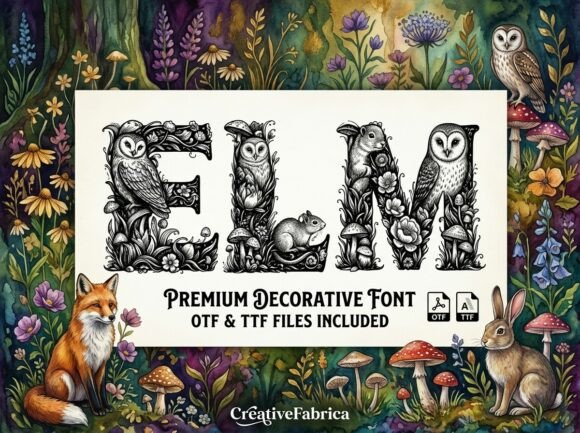
Imagine a typeface that doesn't just spell words but tells a story with every curve and serif. That's the promise of Elm, a premium decorative font that steps directly out of a woodland fairy tale. This isn't your standard serif or sans serif font; it's a masterclass in illustrative typography, where each character is meticulously crafted from the elements of a deep, magical forest. Watchful owls perch on serifs, curious squirrels form the spines of letters, and hidden mushrooms and twisting ivy weave through the ligatures. Elm is a creative font with a distinct "woodland-storybook" soul, designed for projects that demand more than just text—they demand an experience.
A Typeface with a Living Personality
At its core, Elm is a display font, meaning it's built for impact and presence in headlines, titles, and logos rather than for body copy. Its personality is one of whimsy, nostalgia, and intricate detail. The visual style leans heavily into a rich, illustrative quality, making it feel hand-drawn and organic. This isn't the clean, geometric lines of modern typography; it's a typeface that feels alive, textured, and full of narrative depth. For a designer, the appeal is in its ability to instantly set a powerful, specific tone. Using Elm in a project signals a connection to nature, fantasy, and a certain handcrafted elegance that's hard to replicate with more conventional design assets.
Where Elm Truly Shines: Real-World Applications
The strength of a creative font like Elm lies in its specificity. It's not a jack-of-all-trades, but a master of a particular visual language. Understanding where it works best is key to unlocking its potential without overwhelming your project.
For Publishers and Authors
This is Elm's home turf. It is the premier choice for independent fantasy book titles, especially those in the young adult, cozy fantasy, or fairy tale retelling genres. Imagine the title of a novel about a forest guardian or a lost magical kingdom—Elm's letterforms would give it immediate shelf appeal and genre recognition. It transforms a simple title into a piece of cover art, establishing the book's world before the first page is turned. For editorial design within such a book, like chapter headings or drop caps, Elm can add a consistent thematic touch that deepens the reader's immersion.
For Branding and Marketing
Entrepreneurs and small business owners in specific niches will find Elm invaluable. A craft brewery specializing foraged botanical ales, a boutique herbalist shop, a children's nature school, or a sustainable forestry brand could all build a memorable brand identity around this typeface. In logo design, Elm works beautifully as a standalone wordmark or paired with a simple, clean icon. Its detailed nature means it needs space to breathe, so it's perfect for a main logo but should be used judiciously elsewhere in the brand system. For social media graphics, particularly headers or featured post images on platforms like Instagram or Pinterest, Elm can stop the scroll with its enchanting detail, perfectly capturing a "forest-aesthetic" audience.
For Digital and Personal Projects
Beyond commercial use, Elm is a fantastic tool for content creators and hobbyists. It can elevate the branding for a nature documentary channel on YouTube, adding a layer of sophistication and thematic consistency to thumbnails and intro sequences. For personal projects, consider it for nursery wall art—spelling out a child's name or a gentle forest-themed quote. It's also a standout choice for wedding invitations or event materials for a woodland-themed celebration. Crafters can use it for custom vinyl decals, embroidery patterns, or printable art, turning a simple word into a cherished decorative element.
Making Elm Work for You: Practical Guidance
Choosing and using a specialty font like Elm requires a bit more thought than picking a standard workhorse. Here’s how to approach it for the best results.
Evaluating Project Fit: Before you commit, ask yourself: Does my project's core message align with nature, fantasy, or whimsy? If you're designing a corporate financial report, Elm is the wrong tool. If you're creating a logo for a woodland escape game, it's perfect. The font should amplify your message, not distract from it.
Font Pairing is Everything: Because Elm is so detailed, it demands a simple partner. Pair it with a clean, neutral sans serif font like Montserrat, Lato, or Open Sans for any body text or secondary information. This creates a strong visual hierarchy: the decorative Elm draws the eye for the headline, while the simple sans serif ensures readability for the supporting text. Avoid pairing it with another script font or handwritten font, as this will create visual chaos.
Readability and Use Cases: Remember, Elm is a display font. Its intricate details, while beautiful, can reduce legibility at very small sizes or in long passages. Use it for short, impactful text—titles, headers, pull quotes, and logos. For anything longer than a sentence, switch to your paired body font. Always test how it looks in the specific size and context you plan to use it in.
Review the Included Styles: A premium font package often includes more than one style. Check if Elm comes with alternates, ligatures, or stylistic sets. These features can give you even more creative control, allowing you to swap out certain characters to better fit your layout or add a unique flourish to a particular word.
Understand the Licensing: As a commercial font, Elm will come with a license that dictates how you can use it. Carefully review whether the license covers your intended use—whether it's for a single client project, for your own business's digital and print materials, or for creating products for sale (like on Etsy). Respecting the license protects you legally and supports the talented type designers who create these valuable assets.
In the end, Elm is more than just a set of letters; it's a design partner for storytellers. It offers a direct pathway to a specific, evocative aesthetic that can define a brand, captivate an audience, and turn a simple piece of text into a portal to an enchanted world. By using it thoughtfully and strategically, you can harness its woodland magic to make your next project truly unforgettable.